Heap(Priority Queue)에서 특정 index의 값을 수정하는 방법에 대한 글이다.
아래의 내용을 이해하기 위해서는 "배열을 이용한 Heap 구현"에 대해서 알고 있어야 한다.
아래의 링크에는 Heap에 대한 자세한 설명이 있다.
[자료구조] 힙(heap)이란 - Heee's Development Blog
Step by step goes a long way.
gmlwjd9405.github.io
흔히 알고있는 배열을 이용하여 Heap을 구현한 방법은 아래 코드와 같다.
#define MAX_SIZE 100

int heap[MAX_SIZE];
int heap_size = 0;

void HeapInit(void)
{
	heap_size = 0;
}

void GoUp(int index)
{
	int current = index;
	while (current > 0 && heap[current] < heap[(current - 1) / 2])
	{
		int temp = heap[(current - 1) / 2];
		heap[(current - 1) / 2] = heap[current];
		heap[current] = temp;
		current = (current - 1) / 2;
	}
}

void GoDown(int index)
{
	int current = index;
	while (current * 2 + 1 < heap_size)
	{
		int child;
		if (current * 2 + 2 == heap_size)
		{
			child = current * 2 + 1;
		}
		else
		{
			child = heap[current * 2 + 1] < heap[current * 2 + 2] ? current * 2 + 1 : current * 2 + 2;
		}

		if (heap[current] < heap[child])
		{
			break;
		}

		int temp = heap[current];
		heap[current] = heap[child];
		heap[child] = temp;

		current = child;
	}
}

void HeapPush(int value)
{
	if (heap_size + 1 > MAX_SIZE)
	{
		printf("queue is full!");
		return;
	}

	heap[heap_size] = value;
	heap_size++;
	GoUp(heap_size - 1);
}

void HeapPop(int* value)
{
	heap_size--;
	*value = heap[0];
	heap[0] = heap[heap_size];
	GoDown(0);
}
위 코드를 보면 Push와 Pop연산을 GoDown( ), GoUP( ) 을 통해서 구현했는데,
자세한 이유는 아래에 설명한다.
Heap이 동작하는 방법을 먼저 생각해보면,
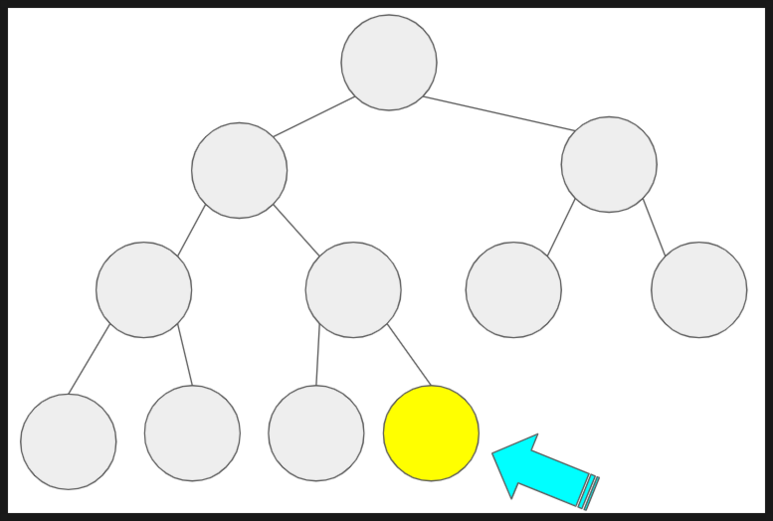
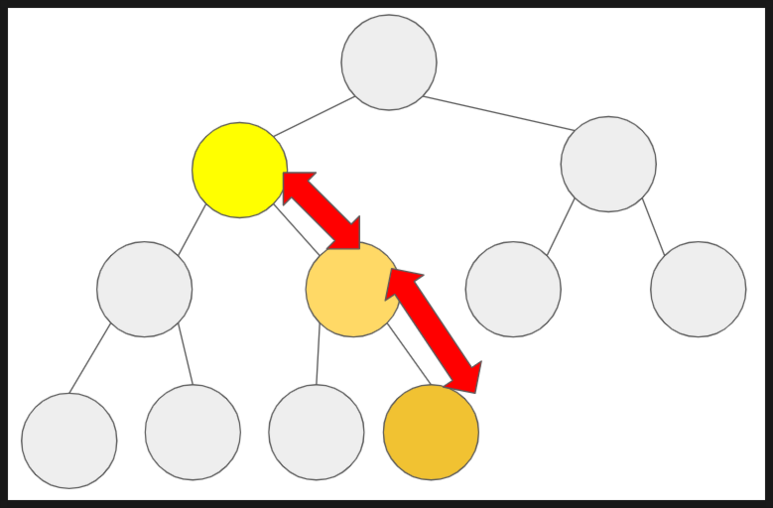
Push
→ Heap 이진트리의 제일 뒤쪽에 값을 집어넣고
→ 그 노드가 올라갈 수 있는 최대한으로 "올려"보낸다
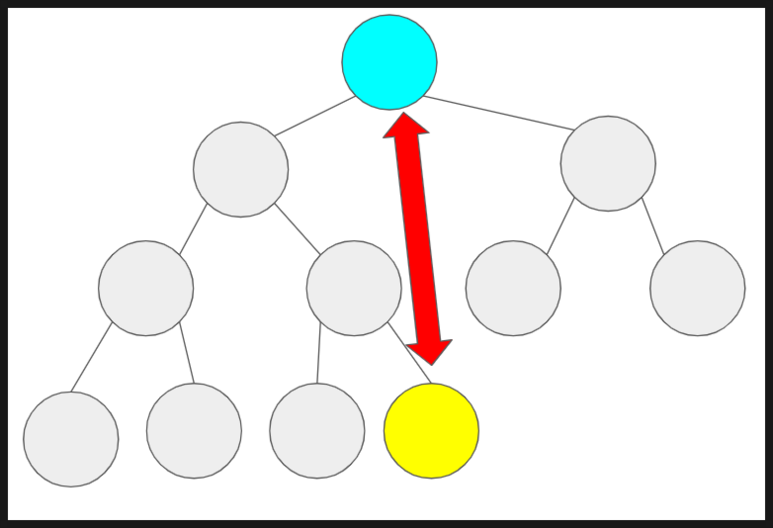
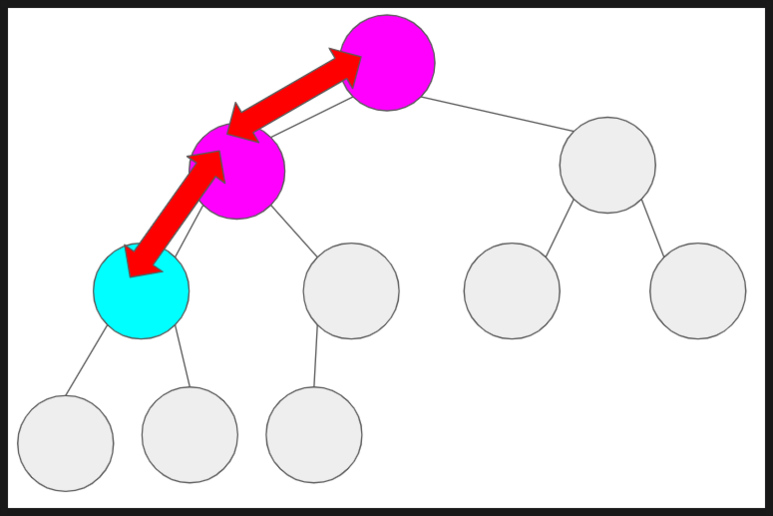
Pop
→ Heap 이진트리의 제일 끝과, 제일 꼭대기를 교환하고
→ 꼭대기로 올라온 노드를 아래로 "내려"보낸다
이렇게 일반적으로 구현된 Heap에서 원하는 노드만 값을 변경하고, Heap의 특성을 유지해야 한다
"i 번째로 삽입된 노드의 값 변겅", "id가 특정한 값을 가지는 노드의 값 변경" 같은 상황에 사용하고자 한다.
정리하자면, 다음과 같은 문제를 풀고자 한다.
배열 a[0], a[1], ...... a[n-1]에 대해서
→ a[i]의 값을 v로 바꾼다
→ a[0], a[1] .......a[n-1] 中 가장 작은 min 값을 출력
똑같은 기능을 구현하는 문제는 아래와 같다.
14427번: 수열과 쿼리 15
길이가 N인 수열 A1, A2, ..., AN이 주어진다. 이때, 다음 쿼리를 수행하는 프로그램을 작성하시오. 1 i v : Ai를 v로 바꾼다. (1 ≤ i ≤ N, 1 ≤ v ≤ 109) 2 : 수열에서 크기가 가장 작은 값의 인덱스를
www.acmicpc.net
원하는 동작을 대략적으로 적어보면,
기능1 : 수열의 특정한 index에 해당하는 값이 Heap에 어디에 위치하는지 알아낸다
기능2 : 수열및 heap의 특정한 index에 해당하는 값을 변경한다
기능3 : 항상 최소 값을 출력할 수 있도록, Heap의 구조를 유지한다
위의 3가지 기능을 수행시키면 원하는 것을 수행 할 수 있다.
또한, heap 내부에서 index의 위치를 관리 및 추적 할 수 있는 기능이 필요한다.
먼저 "기능1"을 구현해 보자.
void HeapPush(int value, int idx)
{
	if (heap_size + 1 > MAX_SIZE)
	{
		printf("queue is full!");
		return;
	}

	heap[heap_size].value = value;
	heap[heap_size].idx = idx;
	heap_index[idx] = heap_size;
	heap_size++;
	GoUp(heap_size - 1);
}
Heap에서 원소를 추가할 때는, 트리의 가장 마지막에 위치시킨다.
그럼, i번 원소를 heap에 넣은뒤, 아무런 이동이 없다면 i번 노드의 index는 heap_size가 된다.
추가한 원소는 위로 트리에서 위로 올려 보내야 하는데, 이때 index도 같이 관리하여 바꿔준다.
void GoUp(int index)
{
	int current = index;
	int parent_idx = (current - 1) / 2;
	while (current > 0 &&  (heap[current].value < heap[(current - 1) / 2].value  ||
		(heap[current].value == heap[(current - 1) / 2].value && heap[current].idx < heap[(current - 1) / 2].idx)) )
	{
		parent_idx = (current - 1) / 2;

		Pii temp = heap[parent_idx];
		heap[parent_idx] = heap[current];
		heap[current] = temp;

		heap_index[ heap[parent_idx].idx ] = parent_idx;
		heap_index[ heap[current].idx ] = current;

		current = parent_idx;
	}
	return;
}
위 source code를 보면 heap_index[x]는 x번째로 삽입된 원소가 heap 에서 어디에 위치하는지 나타낸다.
heap[ heap_index[x] ] == "x번째 삽입된 원소"
마찬가지로, Pop의 경우에는 트리에서 아래로 내려보내는 함수가 필요한데, 거기에서도 index를 관리하는 기능을 추가하자.
void GoDown(int index)
{
	int current = index;
	while (current * 2 + 1 < heap_size)
	{
		int child;
		if (current * 2 + 2 == heap_size)
		{
			child = current * 2 + 1;
		}
		else
		{
			child =(
				heap[current * 2 + 1].value < heap[current * 2 + 2].value ||
				( heap[current * 2 + 1].value == heap[current * 2 + 2].value &&
				heap[current * 2 + 1].idx < heap[current * 2 + 2].idx )
				)
				? current * 2 + 1 : current * 2 + 2;
		}

		if (heap[current].value < heap[child].value ||
			(heap[current].value == heap[child].value && heap[current].idx < heap[child].idx))
		{
			break;
		}

		Pii temp = heap[current];
		heap[current] = heap[child];
		heap[child] = temp;

		heap_index[heap[current].idx] = current;
		heap_index[heap[child].idx] = child;

		current = child;
	}
}
이제 남은 문제는 아래 그림처럼, Heap 자료구조 가운데에 원소의 값이 바뀐 경우이다.
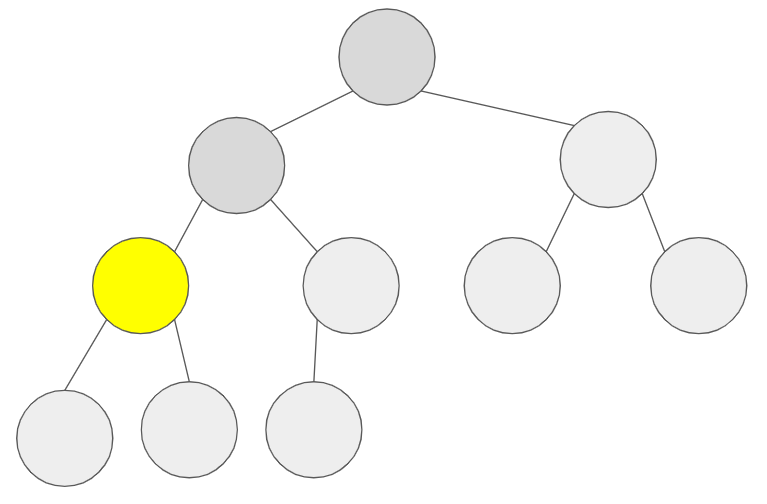
이 경우에도 Heap 구조를 계속 유지시켜야 한다.
방법은 간단한데, Heap에서 원소의 이동은 위방향, 아래방향 둘 중 하나밖에 없다.
즉, 무슨 소리냐 하면, 원소의 이동이 필요한 경우 원소는 한 방향으로만 움직인다.
그러므로, 위로 갔다가 아래로 가거나, 아래로 가다가 위로 가는 경우는 없다.
간단하게 이미 존재하는 함수들로 해결책을 만들면 아래와 같다.
/*
index번째 삽입된 원소의 값을 v로 바꾼다.
*/
void HeapUpdateDirect(int index, int v)
{
	heap[heap_index[index]].value = v;
	GoUp(heap_index[index]);
	GoDown(heap_index[index]);
}
비교 연산자가 잘 정의 되어 있다면, 원소는 한 방향으로만 움직이기 때문에 GoUp( ), GoDown( )이 두개가 동시에 반영되지 않는다.
예시를 들어 간단히 증명해보이자.
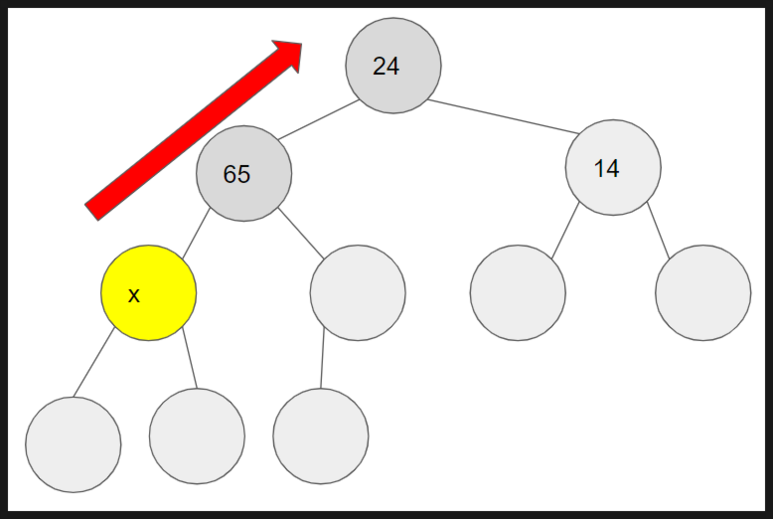
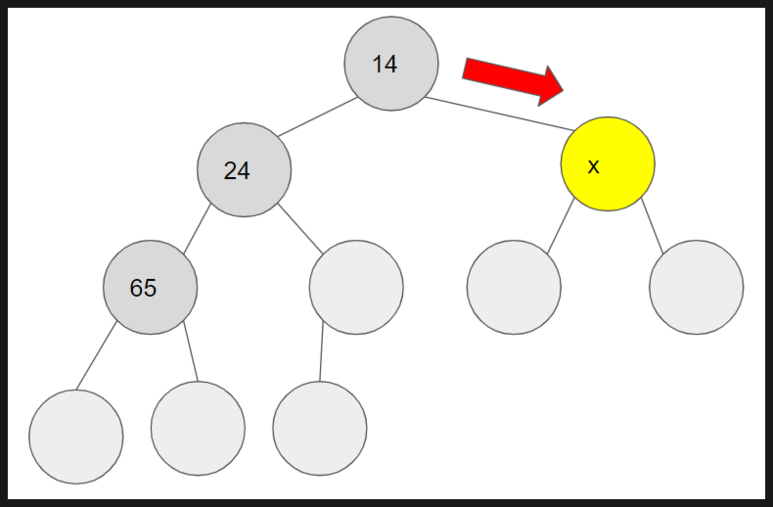
값이 변경된 원소 x가 꼭대기로 올라갔다가 하나 내려온 상황을 생각해 보자.
만약 이런 상황이 발생했다면 아래의 조건이 만족되었다는 얘기이다.
(( x<24 ) && (14<x))
즉, 위의 왼쪽 그림에서 처럼 ( 14<24 )가 되어서 애초에 이미 heap 구조를 만족하지 않는 것이 되어버린다.
그러므로, 위로 올라갔다가 아래로 내려가는 상황은 발생 하지 않는다.
반대로 생각해보면, 아래로 내려갔다가 위로 올라가는 상황도 발생하지 않는다.
문제
14427번: 수열과 쿼리 15
길이가 N인 수열 A1, A2, ..., AN이 주어진다. 이때, 다음 쿼리를 수행하는 프로그램을 작성하시오. 1 i v : Ai를 v로 바꾼다. (1 ≤ i ≤ N, 1 ≤ v ≤ 109) 2 : 수열에서 크기가 가장 작은 값의 인덱스를
www.acmicpc.net
Source Code
#define _CRT_SECURE_NO_WARNINGS

#include <stdio.h>

#define MAX_SIZE (100009)

typedef struct Pii_t
{
	int value;
	int idx;
}Pii;

Pii heap[MAX_SIZE];
int heap_index[MAX_SIZE];
int heap_size = 0;

void HeapInit(void)
{
	heap_size = 0;
}

void GoUp(int index)
{
	int current = index;
	int parent_idx = (current - 1) / 2;
	while (current > 0 &&  (heap[current].value < heap[(current - 1) / 2].value  ||
		(heap[current].value == heap[(current - 1) / 2].value && heap[current].idx < heap[(current - 1) / 2].idx)) )
	{
		parent_idx = (current - 1) / 2;

		Pii temp = heap[parent_idx];
		heap[parent_idx] = heap[current];
		heap[current] = temp;

		heap_index[ heap[parent_idx].idx ] = parent_idx;
		heap_index[ heap[current].idx ] = current;

		current = parent_idx;
	}
	return;
}

void GoDown(int index)
{
	int current = index;
	while (current * 2 + 1 < heap_size)
	{
		int child;
		if (current * 2 + 2 == heap_size)
		{
			child = current * 2 + 1;
		}
		else
		{
			child =(
				heap[current * 2 + 1].value < heap[current * 2 + 2].value ||
				( heap[current * 2 + 1].value == heap[current * 2 + 2].value &&
				heap[current * 2 + 1].idx < heap[current * 2 + 2].idx )
				)
				? current * 2 + 1 : current * 2 + 2;
		}

		if (heap[current].value < heap[child].value ||
			(heap[current].value == heap[child].value && heap[current].idx < heap[child].idx))
		{
			break;
		}

		Pii temp = heap[current];
		heap[current] = heap[child];
		heap[child] = temp;

		heap_index[heap[current].idx] = current;
		heap_index[heap[child].idx] = child;

		current = child;
	}
}

void HeapPush(int value, int idx)
{
	if (heap_size + 1 > MAX_SIZE)
	{
		printf("queue is full!");
		return;
	}

	heap[heap_size].value = value;
	heap[heap_size].idx = idx;
	heap_index[idx] = heap_size;
	heap_size++;
	GoUp(heap_size - 1);
}

Pii HeapTop(void)
{
	return heap[0];
}

void HeapPop(int* value)
{
	heap_size--;

	*value = heap[0].value;
	heap[0] = heap[heap_size];

	GoDown(0);
}

void HeapUpdateDirect(int index, int v)
{
	heap[heap_index[index]].value = v;
	GoUp(heap_index[index]);
	GoDown(heap_index[index]);
}

int main(int argc, char* argv[])
{

	int N;
	//freopen("sample_input.txt", "r", stdin);
	scanf("%d", &N);

	HeapInit();

	for (int i = 0; i < N; i++)
	{
		int tmp;
		scanf("%d", &tmp);
		HeapPush(tmp, i);
	}

	int num_query;
	scanf("%d", &num_query);

	while (num_query--)
	{
		int type;
		scanf("%d", &type);
		switch (type)
		{
		case 2:
			printf("%d\n", HeapTop().idx + 1);
			break;
		case 1:
			int i, v;
			scanf("%d %d", &i, &v);
			HeapUpdateDirect(i - 1, v);
			break;
		default:
			break;
		}
	}

	return 0;
}
'Coding > C' 카테고리의 다른 글
| [C] Priority Queue (0) | 2025.11.16 |
|---|---|
| [C] Quick Sort (0) | 2025.11.15 |
| [C] AVL Tree (0) | 2024.02.05 |
| [C] RB Tree 구현 (1) | 2024.02.05 |

